
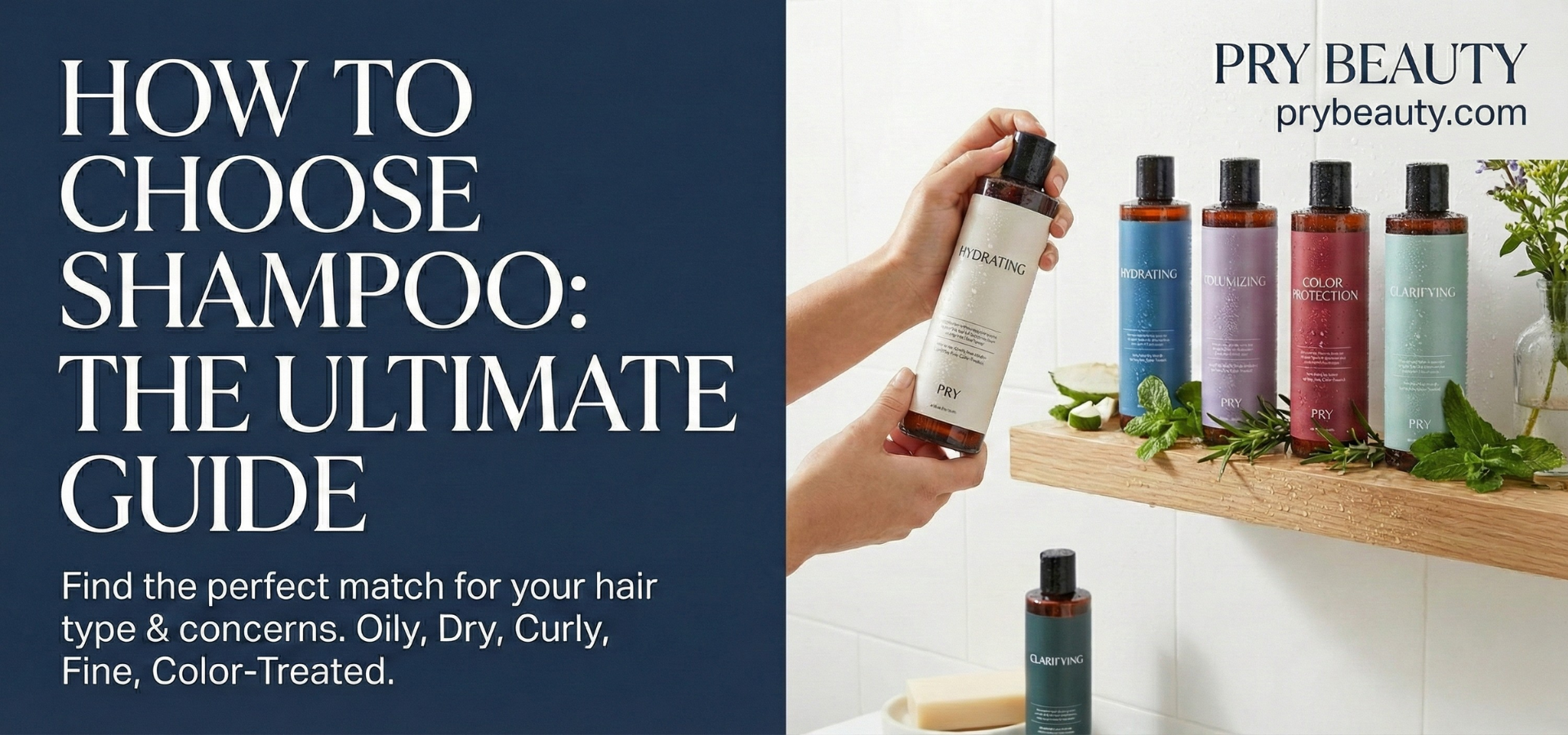
Finding the perfect shampoo often feels like an endless cycle of trial and error. We've all been there: buying a bottle because of a pretty label or a viral trend, only to find our hair feeling limp, greasy, or straw-like after a week. At PryBeauty, we believe your hair journey starts with the right foundation. This guide will walk you through the science of cleansing, how to decode ingredient labels for safety, and exactly how to pick the bottle that matches your unique scalp and hair profile.
Why Your Shampoo Choice Is a Game-Changer
Choosing a shampoo isn't just about "washing" your hair; it's about maintaining the health of your scalp—the "soil" from which your hair grows. Using the wrong formula can lead to clogged follicles, chronic dryness, or even increased shedding.
Myth: "You need lots of foam for a good clean."
Fact: Suds are created by surfactants (like sulfates). Many professional sulfate-free formulas don't foam much but cleanse just as effectively without stripping the protective lipid layer of the scalp.
Step 1: Know Your Scalp Type (The Foundation)
Your scalp type dictates your washing frequency. Below is our professional guide to matching your scalp needs with the right solution.
| Scalp Type | How It Feels | Professional Solution |
|---|---|---|
| Oily Scalp | Greasy within 24 hours. | Look for "Clarifying" labels. Shop Oily Hair Care → |
| Dry Scalp | Itchy, tight, or prone to dry flakes. | Hyaluronic Acid & Aloe Vera. Shop Hydrating Shampoos → |
| Sensitive Scalp | Redness or irritation. | Fragrance-free & Hypoallergenic. Shop Sulfate-Free Options → |
🌿 Professional Usage Guide: For the best results, always perform a Double Wash. The first lather breaks down surface oils, dust, and pollution. The second lather allows the active ingredients (like Keratin or Vitamin E) to actually reach the scalp and hair fiber. Always rinse with cool water to seal the cuticle.
Decoding Ingredients: Safety & Efficacy
As a professional-focused brand, PryBeauty prioritizes "biocompatible" ingredients. Here is the science behind what we look for.
Ingredients to Love (The Power Actives)
- Hydrolyzed Keratin: Unlike standard keratin, hydrolyzed molecules are small enough to penetrate the hair shaft and "plug" structural gaps in damaged hair.
- Argan & Jojoba Oils: These mimic the scalp's natural sebum, providing a protective barrier against Mumbai’s heat and humidity.
- Glycerin: A medical-grade humectant that prevents "brittle snap" breakage by pulling moisture deep into the hair shaft.
Safety Standards: Ingredients to Avoid
- Harsh Sulfates (SLS/SLES): These act like industrial degreasers and can cause "rebound oiliness" by stripping 100% of your protective oils.
- Formaldehyde-Releasing Preservatives: We strictly avoid these irritants to ensure our products are safe for long-term daily use.
- Insoluble Silicones: We prefer water-soluble silicones that provide shine but wash away easily, preventing the "crunchy" buildup.
Expert FAQs
Q: Can the wrong shampoo cause hair fall?
A: Indirectly, yes. A shampoo that causes scalp inflammation can disrupt the hair growth cycle. Harsh chemicals can also cause "mechanical breakage," which looks like hair loss but is actually structural failure of the hair strand.
Q: Is sulfate-free better for everyone?
A: It is essential for color-treated or chemically straightened hair. However, if you use heavy styling waxes, we recommend a sulfate-based clarifying wash once every 10 days to prevent buildup.

