
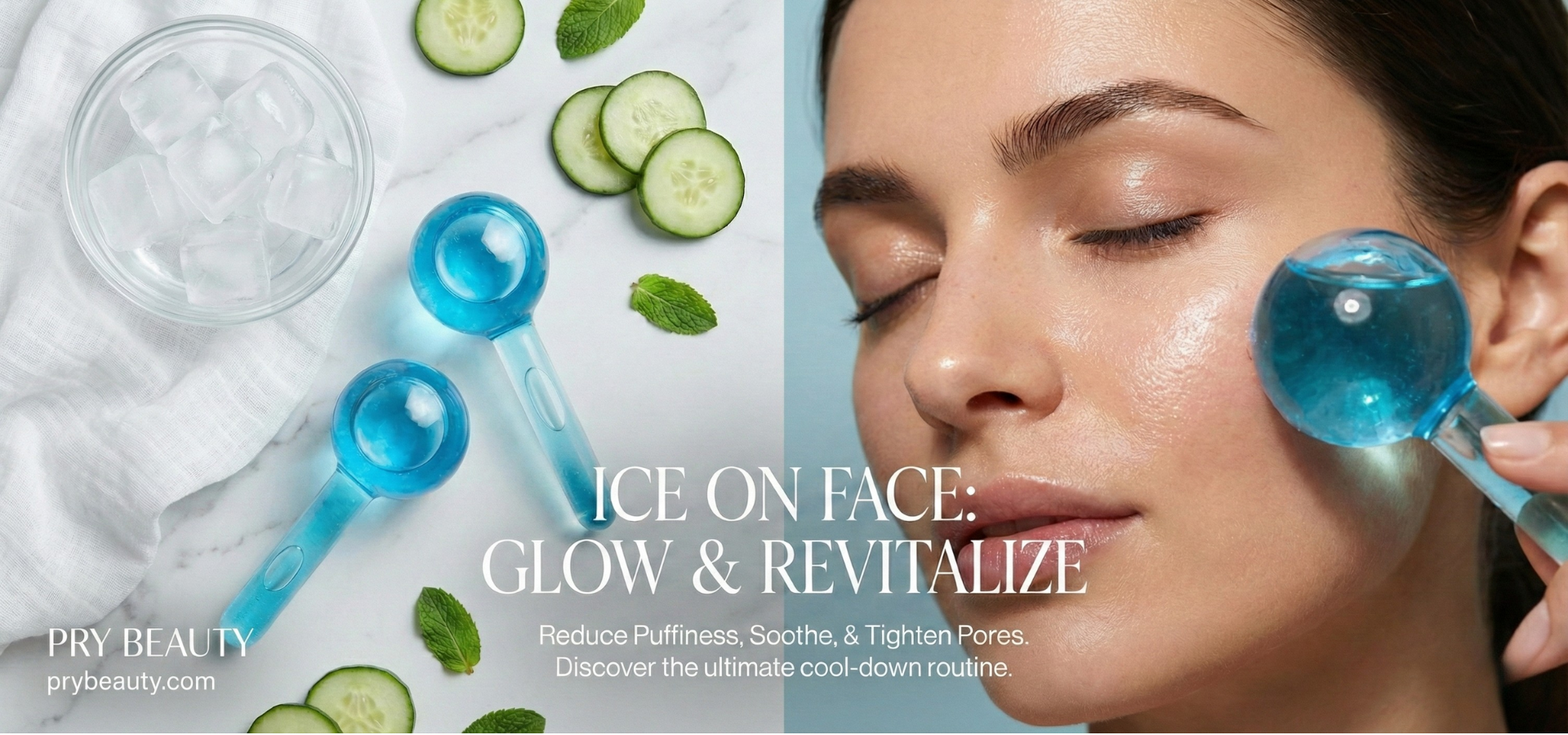
Applying ice on your face—also known in the aesthetic world as localized Cryotherapy or "skin icing"—has exploded in popularity across social media. From reducing morning puffiness to calming active acne flare-ups, cold therapy offers immediate, visible benefits when executed correctly.
However, running a raw ice cube over your face is not without risks. At PryBeauty, we believe in bridging the gap between trending hacks and dermatological safety. This expert guide breaks down the clinical science behind facial icing, the correct professional techniques, and how to safely integrate it into your existing skincare routine.
The Clinical Science: How Cryotherapy Works
Ice impacts your skin's physiology in three major ways:
Cold exposure causes blood vessels to rapidly constrict, forcing excess fluids out of the facial tissues.
- Reduces under-eye bags
- Minimizes morning puffiness
Sub-zero temperatures temporarily reduce nerve activity and slow down the inflammatory cascade.
- Calms cystic acne swelling
- Soothes heat-induced redness
Once the ice is removed, vessels dilate, flooding the skin with fresh, oxygenated blood.
- Creates a "Glass Skin" glow
- Improves serum absorption
Professional Benefits vs. Skincare Myths
Myth: "Ice shrinks pores permanently."
Fact: Pores are not muscles; they cannot open or close. Cold therapy causes the skin around the pore to constrict, making pores appear temporarily smaller and tighter. This makes icing an excellent pre-makeup "primer" step, but it is not a permanent structural fix.
Myth: "Ice cures acne."
Fact: Ice cannot kill acne-causing bacteria. However, it is an incredible tool for reducing the painful, red inflammation of a cystic breakout. Pair icing with our professional BHA (Salicylic Acid) treatments for actual blemish clearing.
⚠️ Clinical Warning: The Risk of Ice Burns
Applying raw ice directly to the epidermis can cause cellular damage, broken capillaries, and frostbite-like "ice burns." Never apply ice directly to the skin. Furthermore, if you suffer from Rosacea, extreme cold can trigger severe flare-ups. Always consult a dermatologist if you have a compromised skin barrier.
The Dermatologist-Approved Icing Protocol
- The Barrier Method: Always wrap your ice cube in a clean, soft cotton cloth or use a professional, silicone-based ice roller.
- The Glide Technique: Never hold the ice stationary in one spot. Keep it moving in continuous, circular, upward motions to promote lymphatic drainage.
- The Time Limit: Limit your icing session to 1-2 minutes per quadrant of your face, and no more than 10 minutes total.
- The Crucial Aftercare: Cryotherapy temporarily disrupts the lipid barrier. Immediately follow up with a hydrating essence or serum to lock in moisture while the skin's microcirculation is at its peak. Shop our Hydrating Serums here.
💡 Professional Upgrade: "Targeted Infusions"
Instead of plain water, freeze targeted ingredients to suit your skin type. Use Green Tea cubes for oily/acne-prone skin (rich in EGCG antioxidants), or Chamomile Tea cubes for soothing sensitive skin.
Expert FAQs
Q: Should I ice before or after my skincare routine?
A: Always ice on a clean, bare face before applying your serums. Icing after moisturizing will freeze the product and prevent absorption.
Q: Does ice help with dark circles?
A: It helps reduce the fluid retention (puffiness) that casts shadows under the eyes, making dark circles look lighter. However, it cannot remove genetic pigmentation.
Q: Is it safe to use ice on my face daily?
A: Yes, provided your skin barrier is healthy, you use a cloth barrier, and you stick to the 1-2 minute time limit.
Maximize Your Results
Skin icing is a fantastic preparatory step, but real transformation requires clinical-grade ingredients. Pair your cryotherapy routine with PryBeauty's advanced skincare formulations.
SHOP PROFESSIONAL FACE CARE
